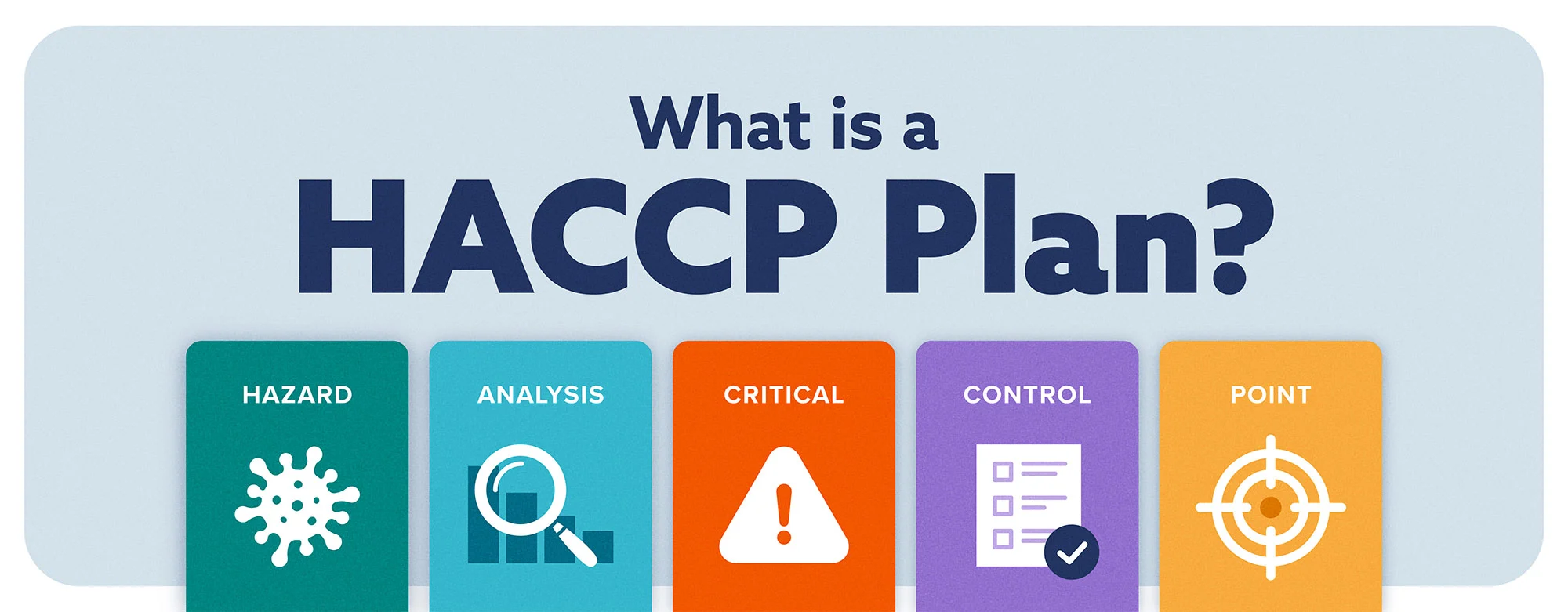
What is a HACCP Plan?
HACCP (Hazard Analysis and Critical Control Points) is a systematic preventive approach to food safety that addresses physical, chemical, and biological hazards as a means of prevention rather than finished product inspection.
A HACCP plan is a food safety management system that identifies and controls potential hazards throughout the food production process, from receiving raw materials to distributing the final product.
Benefits of Having a HACCP Plan
- Food Safety Assurance: Systematic approach to identifying and preventing food safety hazards
- Regulatory Compliance: Meets FDA, USDA, and state food safety requirements
- Risk Reduction: Minimizes the risk of foodborne illness outbreaks
- Customer Confidence: Demonstrates commitment to food safety and quality
- Legal Protection: Provides documentation of due diligence in food safety
- Operational Efficiency: Identifies process improvements and reduces waste
- Market Access: Required for many wholesale and retail customers
- Insurance Benefits: May reduce liability insurance premiums
Who Needs a HACCP Plan?
- Juice processors and manufacturers
- Seafood processors and importers
- Meat and poultry processing facilities
- Food manufacturers producing ready-to-eat foods
- Commercial food processors
- Food businesses selling to wholesale/retail chains
- Businesses exporting food products
- Food facilities required by state or local regulations
HACCP Plan Components
A comprehensive HACCP plan includes:
- Product Description: Detailed description of all products covered by the plan
- Process Flow Diagram: Visual representation of all steps in the food production process
- Hazard Analysis: Identification of biological, chemical, and physical hazards
- CCP Determination: Identification and documentation of critical control points
- Critical Limits: Scientific and regulatory-based limits for each CCP
- Monitoring Procedures: Methods, frequency, and responsible parties for monitoring
- Corrective Actions: Predetermined steps to address deviations
- Verification Procedures: Regular review and validation activities
- Record-Keeping System: Forms and documentation requirements
HACCP Plan Development Process
- Assemble HACCP team and define scope
- Describe products and their intended use
- Construct process flow diagrams
- Verify flow diagrams on-site
- Conduct comprehensive hazard analysis
- Determine critical control points (CCPs)
- Establish critical limits for each CCP
- Develop monitoring procedures
- Define corrective actions
- Create verification procedures
- Establish documentation and record-keeping
- Provide staff training
Common Critical Control Points
Typical CCPs in food operations include:
- Receiving: Temperature and quality checks for incoming ingredients
- Cooking/Heating: Minimum internal temperature requirements
- Cooling: Time and temperature controls for hot foods
- Cold Holding: Refrigeration temperature maintenance
- Hot Holding: Minimum holding temperatures
- Reheating: Temperature requirements for previously cooked foods
- Metal Detection: Foreign object prevention
- Pasteurization: Time/temperature for pathogen elimination
HACCP Training Requirements
Proper implementation requires trained personnel:
- HACCP Team Leader: Minimum 8-hour HACCP training course
- Team Members: Understanding of HACCP principles and their roles
- Production Staff: Training on monitoring procedures and critical limits
- Management: Understanding of HACCP system and responsibilities
- Ongoing Training: Regular refresher courses and updates
Our HACCP Plan Services
We provide comprehensive HACCP plan development and support:
- Initial consultation and facility assessment
- Customized HACCP plan development
- Process flow diagram creation
- Hazard analysis and CCP determination
- Critical limits establishment based on regulations
- Monitoring procedures and forms development
- Corrective action protocols
- Verification and validation procedures
- Staff training programs
- Record-keeping system setup
- Annual plan review and updates
- Regulatory compliance verification
- Ongoing support and consultation
HACCP vs Other Food Safety Systems
Understanding the relationship between different food safety programs:
- HACCP: Focuses on critical control points in the process
- GMPs (Good Manufacturing Practices): Foundation programs supporting HACCP
- SSOPs (Sanitation SOPs): Cleaning and sanitation procedures
- FSMA: FDA Food Safety Modernization Act compliance
- SQF/BRC: Third-party certification programs building on HACCP
Maintaining Your HACCP Plan
Ongoing requirements for HACCP compliance:
- Daily monitoring of all CCPs and record-keeping
- Weekly verification activities
- Monthly review of monitoring records
- Annual comprehensive plan review
- Updates when processes or products change
- Staff retraining as needed
- Internal audits and mock recalls
- Documentation of all corrective actions